

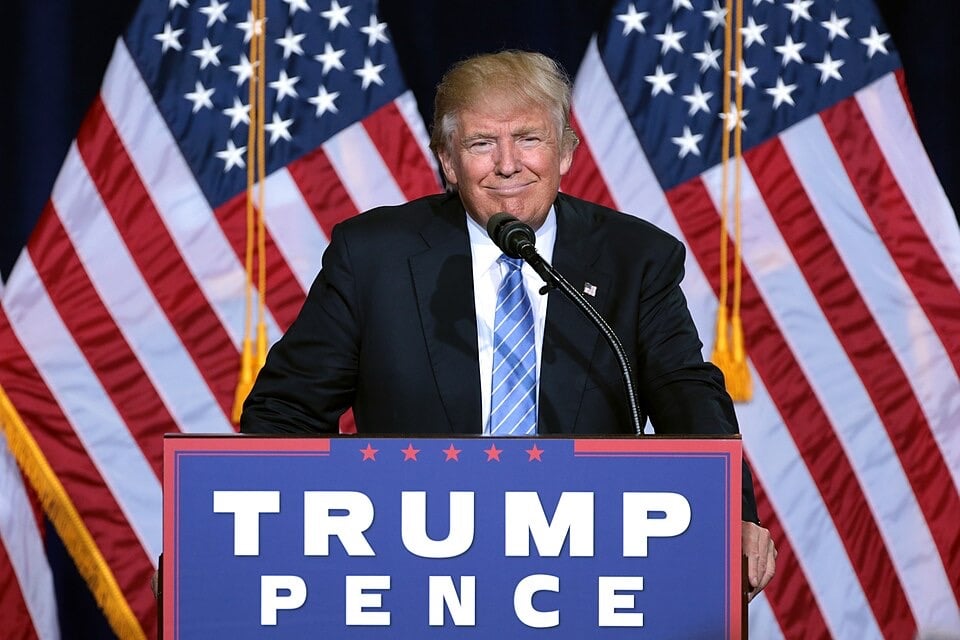
The president’s Truth Social promise covers past elections and the 3 November vote. The White House has not said how the reward would work or who would pay.
President Donald Trump has offered $1m to anyone who reports voter fraud that results in an arrest and conviction. He announced it on Truth Social on Monday, eight days before the 2026 midterm elections. The offer covers alleged fraud in past elections and in the midterms. It comes amid an intensifying administration push against alleged election fraud, including prosecutions, investigations and litigation over voter eligibility and voter rolls.
The announcement
Mr Trump wrote: “Anybody reporting Voter Fraud in the past Elections, or the upcoming 2026 Midterm Election, will be paid $1,000,000 upon the arrest and conviction of those that created the Fraud! Thank you for your attention to this matter. President DONALD J. TRUMP.”
According to the research notes, citing the Financial Times and others, there is no publicly announced application process. The White House has not given a phone number, website or agency to receive tips, and has not identified a funding source. It has not said whether payments would come from an existing budget or need new congressional funding. It referred questions back to the Truth Social post. The Justice Department had not explained how it would administer payments. The offer is therefore a promise and has not been shown to be a functioning federal programme.
It follows a separate scheme unveiled less than a week earlier by Mr Trump and Vice President JD Vance. The notes say the Justice Department published terms for its $25m Fraud Whistleblower Incentive Program on 20 October, with early payments of up to $30,000. That programme targets fraud involving federal programmes such as healthcare, benefits and government contractors, and voter fraud is not listed among its published categories. The existence of the fund does not show that the new election-related rewards can lawfully be paid from it. At the 20 October launch, Mr Trump said he would personally settle disputes when several whistleblowers claimed credit for the same fraud, calling this binding arbitration. The Justice Department’s published rules give the agency discretion over payments. It is unclear whether he intends to do the same for the new reward.
The wider crackdown
The Justice Department said on 20 October that it had charged 113 people in 20 states with illegal voting and illegal registration offences in the preceding seven weeks. The allegations included non-citizens voting in federal elections, people falsely claiming US citizenship on registration forms and people allegedly voting more than once.
On Monday, the department announced charges against 48 further non-US citizens in Pennsylvania, California, Florida, New York and Nevada, according to its published case list. Some are accused of voting in the 2024 presidential election, and others of offences going back several years. These are accusations, not proof. Several defendants are identified as lawful permanent residents, or green-card holders, and not undocumented immigrants. They include a Polish permanent resident in Pennsylvania accused of voting in 2022 and 2024, and a Kenyan permanent resident accused of voting in 2024. Others face allegations over citizenship declarations on naturalisation paperwork. Lawful residence does not ordinarily bring the right to vote in federal elections, but it would be wrong to describe all the defendants as undocumented.
The administration is also trying to stop California counting about 20,000 ballots from voters whose eligibility it disputes. The Los Angeles Times reports that a federal appeals court examined the Justice Department’s request on 25 October, with judges questioning parts of its legal argument. The administration has pursued disputes over voter eligibility and election procedures in Alaska too. The disputed ballots are not proof that 20,000 fraudulent votes were cast.
What the research says
According to the notes, a Brookings Institution study of mail-ballot fraud in the 2016, 2018, 2020 and 2022 general elections estimated an average rate of about 0.000043%, based on documented cases. The Brennan Center for Justice has found voter impersonation to be extremely uncommon, and that some suspected cases involve errors or administrative problems and not deliberate wrongdoing. The Heritage Foundation, which maintains a database of proven election offences, acknowledges that it is not a comprehensive measure of nationwide fraud. These studies do not show that fraud never happens, nor do they support claims that widespread fraud has routinely decided federal elections.
Separately on Monday, Mr Trump questioned Brazil’s presidential election, suggesting without evidence that an extension of voting hours was suspicious. President Luiz Inacio Lula da Silva beat Flavio Bolsonaro by more than four million votes, according to contemporary reporting cited in the notes.
