

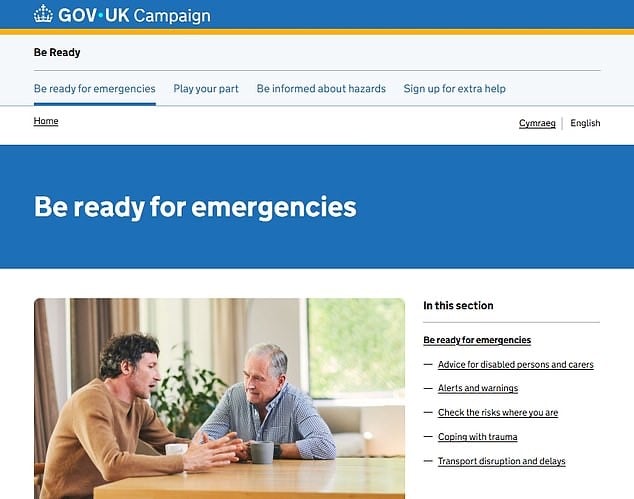
A new Government campaign recommends “small steps” for households, including three days of food and water and enough cash to cope if electronic payments fail.
The Government has launched a campaign telling households to “be ready” for a national crisis. Its checklist includes three days of food and water, cash in case the electronic payments system collapses, and a wind-up or battery radio. Defence Secretary Wes Streeting said the guidance would help people prepare for events such as wildfires, flooding and cyber attacks. It was announced as organisations worldwide rushed to fix a critical flaw in PHP, a programming language used by most websites.
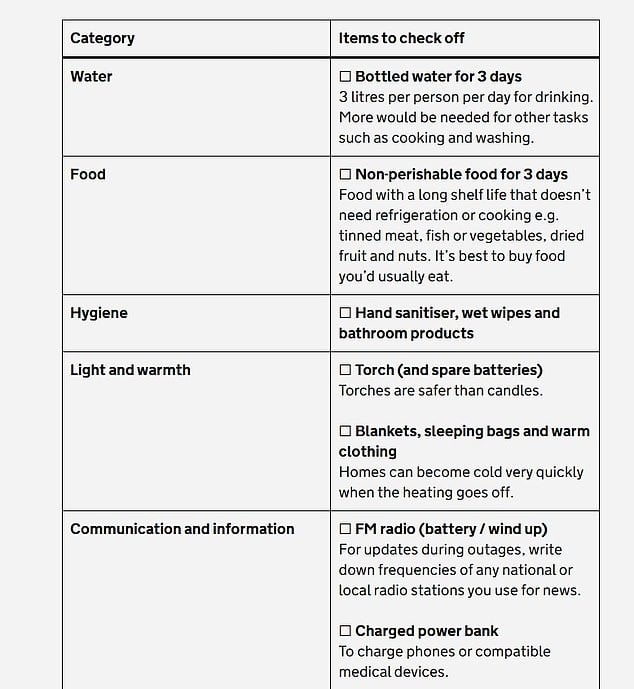
The checklist
The “small steps” also include a power pack to charge devices if the electricity goes off. Mr Streeting spoke at the opening of the UK Gun Hall Plant in Telford. “Are they prepared for the eventuality that there may be disruption to essential supply chains caused by hostile state actors or terrorists?” he asked. “How would we cope if the payment systems of the supermarkets went down?”
He added: “Those are the sorts of everyday challenges and threats we could well face, and it is right we ask the country to be ready for those things and ask everybody to do their bit.”
According to the research notes, the Government’s existing Prepare website suggests 2.5 to 3 litres of water per person per day as a basic survival allowance, about 7.5 to 9 litres over three days. About 30 litres over three days would cover cooking and hygiene. Infants, medical equipment and pets may need more. People who rely on electrically powered medical equipment or have other support needs can register with their utility providers for the Priority Services Register, which offers extra help during disruption.
‘Normal part of everyday life’ in Europe
Security Minister Dan Jarvis said: “Those who can follow this advice should follow this advice.” He stressed that similar guidance had been issued in France, Ireland and the Netherlands.
“By taking simple steps to be ready for everyday emergencies like severe storms, people can reduce pressure on emergency services, helping them prioritise people who need more support in an emergency,” he said. “This is just the sort of community-focused campaign the UK needs to improve our resilience as a nation. It will bring us into line with European counterparts, where advice like this is a normal part of everyday life.”
The head of the army, Sir Roly Walker, said last week that the Government needed to start a “frank conversation” with the public about preparing for war.
How the campaign came about
The campaign was planned before this week’s cyber incident, according to the research notes. The updated National Risk Register, published on 14 July 2026, included plans for a public preparedness campaign and highlighted cyber attacks, extreme weather and interference in democratic processes. The Cabinet Office said on 2 October that it would launch later in the autumn, after consultation with more than 5,000 members of the public and 400 partner organisations, including councils, NHS England, the British Red Cross and the National Emergencies Trust. It is not a warning that a blackout, a supermarket payment failure or war is imminent.
The PHP flaw
Downing Street said on Thursday that no large UK public-facing critical services had been affected. However, 32 Government websites have gone offline while the problems are fixed. Independent reporting describes this as precautionary, and a site being taken down does not show it was hacked.
A No 10 spokeswoman said National Cyber Security Centre experts were working with OpenAI, whose technology was used to discover the vulnerabilities, and with partners around the world.
The notes identify two flaws, both rated 9.2 out of 10 for severity, which could let criminals run code on vulnerable servers without logging in. New Zealand’s cyber agency said on 22 October that attackers were already trying to exploit them. The PHP developers released emergency updates on 21 October (versions 8.5.12, 8.4.27, 8.3.36 and 8.2.35) and urged immediate upgrades. NHS England Digital issued a separate high-severity alert, which does not say that NHS systems have been breached.
