
Breaking News
December 12, 2025 - Mikel Arteta Rules Out Gabriel Jesus Exit from Arsenal in January December 12, 2025 - Erling Haaland's Pursuit of Alan Shearer's Premier League Goal Record: Challenges Ahead December 12, 2025 - Arne Slot Addresses Mohamed Salah's Future at Liverpool December 12, 2025 - Liverpool Transfer Rumors: Salah's Possible Exit and Elliott's Return December 11, 2025 - Inter Miami in Talks with Luis Suárez and Makes De Paul Deal Permanent December 11, 2025 - Chivas Announces 'Chicharito' Hernández Exit Ahead of Liga MX Clausura 2026 December 11, 2025 - Manchester United Not Pursuing Sergio Ramos Transfer, Sources Confirm December 11, 2025 - Champions League Rerank: Arsenal Leads, Man City Climbs After Matchday 6 December 11, 2025 - Christian Pulisic's Stellar Form and Fitness Key for USMNT Success December 11, 2025 - Exploring the World's Weirdest Soccer Leagues and Championship Formats
  • HotRecentNews.com
  • World
  • Politics
  • Sports
  • Entertainment
  • Science
  • Technology
  • Health
HotRecentNews.com
Menu
  • World

  • Politics

  • Sports

  • Entertainment

  • Science

  • Technology

  • Health

Home / Science / Tiny Frogs Travel Thousands of Miles to Save Their Species

Tiny Frogs Travel Thousands of Miles to Save Their Species
Tiny Frogs Travel Thousands of Miles to Save Their Species
No Comments 27
Facebook X
Science February 4, 2025 08:06

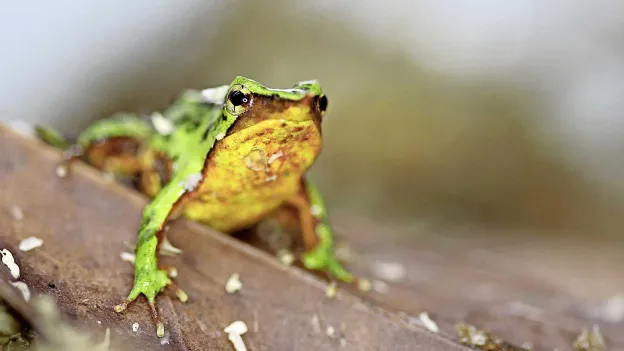
chiloe island, chile; london, uk - Eleven male Darwin's frogs make a long journey to London Zoo to help save their endangered species from a deadly fungus.

Main Goal: Saving a Species

Eleven male Darwin's frogs are on a mission to save their species from extinction. These tiny frogs, native to an isolated part of Chiloé Island in Chile, are under threat from a deadly fungus known as 'Chytridiomycota'.

In a desperate attempt to rescue the species, a team of conservationists traveled to Chile to collect healthy Darwin's frogs. They managed to gather 52 frogs, transporting them over 11,000 kilometers to London Zoo, where eleven males carried 33 tadpoles that were born in captivity.

Ben Tapley, the amphibian curator at London Zoo, emphasized the urgency of the situation, stating, 'We knew we were embarking on something special: time was running out, and we had to act quickly if we wanted to save these frogs.'

Now housed in pairs in specially designed tanks mimicking their natural habitat, the frogs will be part of a breeding program to ensure their survival. The London Zoo aims to release these frogs back into the wild in the future. This conservation effort not only benefits the species but also provides insights into combating the deadly fungus and protecting amphibians worldwide.

NEW Researchers Find 'Compelling Evidence' of Possible Noah's Ark Remains

Leave a comment Cancel

reload

Trending Now

  • Today
  • Yesterday
  • Month
  • Comments
  • 1

    Arsenal's Title Aspirations Questioned: Pressure Handling Key to Premier League Success

    December 14, 2025
  • 1

    Thomas Frank Vows Tottenham Signings in January Transfer Window

    December 13, 2025
  • 2

    Soccer Statues: Messi, Ronaldo, Beckham Among Best and Worst Tributes

    December 13, 2025
  • 3

    Chelsea Leading Race to Sign AZ Alkmaar Wonderkid Kees Smit

    December 13, 2025
  • 4

    Premier League Live Updates: Liverpool vs. Brighton, Chelsea vs. Everton

    December 13, 2025
  • 5

    Mohamed Salah Shines in Liverpool's Win Against Brighton Amid Transfer Rumors

    December 13, 2025
  • 1

    Italy Faces World Cup Playoff Pressure After Moldova Win

    November 14, 2025
  • 2

    2026 World Cup: Early Predictions and Favorites Revealed by ESPN FC Contributors

    November 14, 2025
  • 3

    Scott McTominay's Bicycle Kick Thrills Scotland Fans in World Cup Qualifier

    November 19, 2025
  • 4

    2026 World Cup Playoff Draws: Predictions and Reactions Revealed

    November 20, 2025
  • 5

    Sunderland vs. Bournemouth: English Premier League Match Analysis

    November 29, 2025
Hot Recent News
The HOTRECENTNEWS.com is not responsible for the content of external sites.

SEARCH

  • World News

Back to Top